While anglerfishes
are recognized for having unique features, the most well-known attribute
pertains to the natural tool many of the fishes use for feeding. This tool is a
modified dorsal spine that forms a lure and is used to attract prey. It is
common among many varieties of Lophiiformes, like Ceratioids, but is not
identical from one species to another.

Fig. 1 The angling fish can look quite different from each
other (http://tinyurl.com/kcbhj3t)
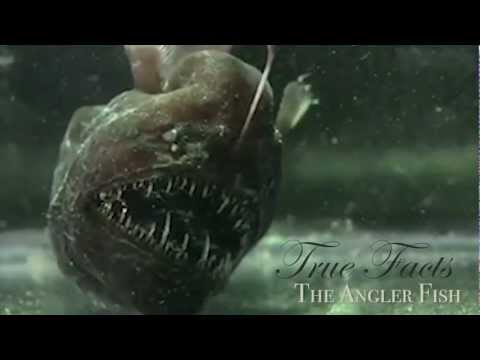
Ceratioids, or
seadevils, are widely recognized due to a combination of their luminescent angling
lures, black skin pigment, and fang-like depressible teeth (Anderson and
Leslie, 2001).

Fig. 2 Deep-sea ceratioid anglerfish (http://tinyurl.com/klnpl9o)
The lure is not a
trait exclusive to Ceratioids, as it is found in most of the living 323
Lophiiform species, but within the Ceratioids, males lack the luring apparatus
(Quigley, 2014). In addition to the lack of a lure, males also lose their
normal jaw teeth during metamorphosis, and instead develop a set of denticles to
grasp onto prospective mates (Quigley, 2014). The males are obligatory sexual parasites
(Anderson and Leslie, 2001) with well-developed large eyes, and oversized
nostrils that aid in detecting potential mates through recognition of a
species-specific chemical attractant emitted by females (Quigley, 2014). Ceratioid
fishes are noted for their sexual dimorphism, with males displaying dwarfism, a
denticular apparatus, an absence of specific traits, and total structural
reorganization (M.P. et al., 2016). The strong differences between the two
genders make Ceratioids easily distinguishable from their bottom-living
Lophiiform relatives, like Lophius
piscatorius (Quigley, 2014).

Fig. 3 Longray
Seadevil, Ceratias holboelli (http://tinyurl.com/kdfw3yr)
The adaptations of
Ceratioids have allowed the anglerfishes to survive in various waters, with
sightings recorded in all oceans to both subpolar regions (Anderson and Leslie,
2001) and just one sole finding in Russian waters (Kharin and Milovankin, 2007).
Due to their relative abundance, high species diversity, and trophic position as
top primary carnivores, ceratioid anglerfishes hold high ecological importance
(Quigley, 2014).
Although they are not the most commonly discussed of the anglerfishes, seadevils clearly have an array of noteworthy features that separate them from similar fishes, and aid in their survival. Not only are Ceratioidei hardly limited by water conditions, but their reproductive strategies transform their ability to survive into an ability to thrive.
Although they are not the most commonly discussed of the anglerfishes, seadevils clearly have an array of noteworthy features that separate them from similar fishes, and aid in their survival. Not only are Ceratioidei hardly limited by water conditions, but their reproductive strategies transform their ability to survive into an ability to thrive.
References
Anderson, M. and Leslie, R. (2001). Review of
the Deep-Sea Anglerfishes (Lophiiformes: Ceratioidei) of Southern Africa. Ichthyological
Bulletin, [online] 70, pp.1-29. Available at: http://bit.ly/2qzoUIt [Accessed 18 Apr. 2017].
Kharin, V. and Milovankin, P. (2007). A new
occurrence of the Deepsea Anglerfish Cryptopsaras couesii (Osteichthys:
Lophiiphormes: Ceratiidae) in Russian waters. Journal of Ichthyology,
[online] 47(1), pp.112-113. Available at:
M. P., R., Jacob, V., K. S., S., V. N., S.,
M., H. and M., S. (2016). Three new records of rare deep-sea Anglerfishes
(Lophiiformes: Ceratioidei) from the Northern Indian Ocean. Marine
Biodiversity, [online] 46(4), pp.923-928. Available at: http://bit.ly/2qyZNW4 [Accessed 18 Apr. 2017].
Quigley, D. (2014). Ceratioid Anglerfishes
(Lophiiformes: Ceratioidei) in Irish Waters. Sherkin Comment, [online]
(58), p.7. Available at: http://bit.ly/2p3YuOD [Accessed 18 Apr. 2017].
Fig. 1: Pietsch, T.
(2013). The angling fish can look quite different from each other.
[image] Available at:
https://m.simplyscience.ch/kids-tiere-pflanzen/articles/auf-tauchstation-24659.html
[Accessed 18 Apr. 2017]. http://tinyurl.com/kcbhj3t
Fig. 2: Luminescent Labs (2013). Deep-sea
ceratioid anglerfish. [image] Available at:
http://blog.luminescentlabs.org/post/61812091341/deep-sea-ceratioid-anglerfish-this-beautiful
[Accessed 18 Apr. 2017].
Fig. 3: Bray, D. (2017). Longray
Seadevil, Ceratias holboelli. [image] Available at:
http://fishesofaustralia.net.au/home/family/180 [Accessed 18 Apr. 2017].



Very cool! What is this chemical attractant that the females emit? I’m also curious why they are called seadevils?
ReplyDelete