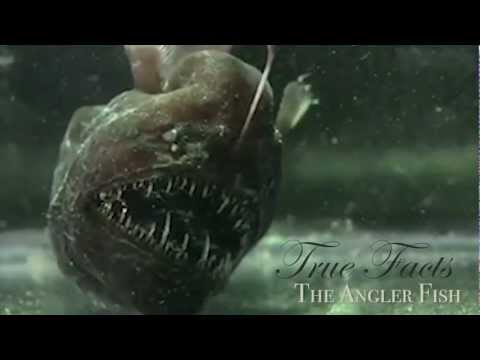
Anglerfishes are primarily known and
praised for their natural fishing lures, or modified dorsal spines, that allow
them to easily attract prey, but not every fish in the family offers the same
features. Even without the use of bioluminescence to entice prey, the anglerfishes
are remarkable and unique creatures. Among the most bizarre of these fishes,
the family Brachionichthyidae, or handfishes, appear to be one of the most
well-developed, but they experience higher predation rates than other
anglerfishes.

Fig. 1 New handfish species walk on by (http://ab.co/2qusx6t)
The Brachionichthyidae family became
known as handfishes because of their specialized fins, which allow them to walk
along the substrate. The different species within the family vary from one fish
to another, but all of the fishes have a small illicium of about 15 centimetres
long located directly above the mouth that appears to serve no purpose (Pietsch,
2005). The benthic fishes reside in inshore waters at depths up to 60 metres
(Pietsch, 2005), where the water temperatures are consistently low, and their
skin is often covered in denticles (Last et al., 2007).
The fish was discovered off Tasmania by a French Explorer named Francois Peron in the early 19th century and is now considered endangered due to its low population (Last et al., 2007). Their limited presence within the seas is likely caused by the high level of predation the fishes experience, which has been brought on strongly by the starfish species Asterias amurensis (Roberts and Hawkins, 1999). A. amurensis, introduced from Japan, has been feeding on the egg clusters left behind by the handfishes, driving the fishes into the brink of extinction (Roberts and Hawkins, 1999).

Fig. 3 Asterias
amurensis (http://bit.ly/2pBNQPv)
Although handfishes have a well-developed mode of locomotion, and appear better evolved than the many other fishes that opt to walk along the substrate, their population is strongly threatened. Because of their struggle to remain present in the ocean, the advantages of their evolutionary adaptations is often questioned, with scientists often claiming that their selected features are in no way increasing the rate of survival, or viability.

Fig. 4 A
female Spotted Handfish, Brachionichthys hirsutus, with fully developed embryos (http://fishesofaustralia.net.au/home/species/2842)
Last, P.,
Gledhill, D. and Holmes, B. (2007). A new handfish, Brachionichthys australis
sp. nov. (Lophiiformes: Brachionichthyidae), with a redescription of the
critically endangered spotted handfish, B. hirsutus (Lacepède). Zootaxa,
[online] pp.53-68. Available at:
http://mapress.com/zootaxa/2007f/z01666p068f.pdf [Accessed 11 May 2017].
Pietsch, T. (2005).
Brachionichthyidae. Handfishes, warty anglerfishes, [online] 9.
Available at: http://tolweb.org/Brachionichthys [Accessed 11 May 2017].
Roberts, C.
and Hawkins, J. (1999). Extinction risk in the sea. Trends in Ecology &
Evolution, [online] 14(6), pp.241-246. Available at: http://www.sciencedirect.com/science/article/pii/S0169534798015845
[Accessed 11 May 2017].
Fig. 1: Gowlett-Holmes,
K. (2010). New handfish species walk on by. [image] Available at: http://ab.co/2qusx6t [Accessed 11
May 2017].
Fig. 2: Baron,
M. (2012). Handfish from Tasmania, Australia - fish that walk. [video]
Available at: http://bit.ly/2q4QYGQ [Accessed 11
May 2017].
http://bit.ly/2pBNQPv [Accessed 11 May 2017].
Fig. 3: Watson, J. (2009). Asterias amurensis. [image] Available at:
http://bit.ly/2pBNQPv [Accessed 11 May 2017].
Fig. 4: Green,
M. (2017). A female Spotted Handfish, Brachionichthys hirsutus, with fully
developed embryos. [image] Available at:
http://fishesofaustralia.net.au/home/species/2842 [Accessed 11 May 2017].



No comments:
Post a Comment