Sunday, 21 May 2017

Evolution Under the Water

Over the past 9 weeks, I have discussed the different evolutionary adaptations of several fishes belonging to the order Lophiiformes. Of these highly unusual fishes, I researched and discussed only a small fraction; the order is comprised of 321 living species, classified among 68 genera, 18 families, and 5 suborders, with nearly half of the species falling into 11 families (Miya et al., 2010). While these remarkable fishes have been thoroughly classified, the evolution of their strange traits is not well known, and is often debated.

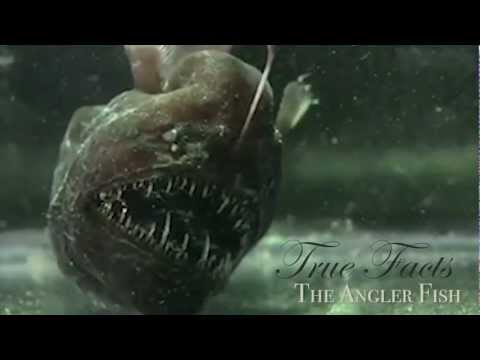
Fig. 1 True Facts About Anglerfish (https://www.youtube.com/watch?v=Z-BbpaNXbxg)

The numerous, bizarre fishes vary from benthic shallow-water dwellers to exceedingly adapted deep sea-midwater species, but the evolutionary origins of their distinct habitats, and overall species diversity, remains greatly mysterious due to the lack of fresh material and an incomplete fossil record (Miya et al., 2010). The fossil record is skewed due to several factors, but primarily because of sedimentary, systematic, and taphonomic biases (Carnevale and Pietsch, 2006). In addition to the issues within the fossil record, it is crucial to consider fossil biodiversities an underestimation of the evolutionary process, regardless of the presence of a hard skeleton and long fossil record (Carneval and Pietsch, 2006).

Fig. 2 Divergence times of the 39 species of the Lophiiformes (http://bit.ly/2pYuloG)

While the evolutionary history of anglerfishes is mostly unknown, the fishes have clearly adapted to the suit a range of environments, as they all have well-adjusted features and behavioural patterns that have allowed the various species to thrive. Some of the fishes have developed different modes of reproduction, like parasitism. Evidence displays that there are three existing modes of reproductive parasitism, and confirms the idea that sexual parasitism evolved separately, within the suborder, on at least three occasions (Pietsch, 2005).

Fig. 3 Male and Female Anglerfishes (http://bit.ly/2pYleEx)


Fig. 4 Anglerfish Mating is Pretty Gross, Guys (https://www.youtube.com/watch?v=9D6pZ2wUCGA)

Outside of reproduction, many of the fishes appear adapted to their environments through physical alterations. Some of the fishes have elongated pelvic and pectoral fins to promote walking on the substrate, modified dorsal spines to attract prey, depressed teeth, globulose bodies, and even more.

Fig. 5 Anglerfishes (http://bit.ly/2qDZEn9)

With some dissimilar reproductive and physical traits, it is no surprise that the behavioural traits of the fishes vary as well, and in many ways. How the fishes evolved their individual attributes is unclear, and may remain a mystery throughout time due to the difficulty of studying specimens and the unreliable fossil record, but phylogenetic studies have been utilising a mitochondrial genome of the Lophiiformes to gain further insight on their evolution (Miya et al., 2010). Until research can more certainly conclude the timeline of the Lophiiform evolutionary history, as well as what occurred, it can only confidently be stated that the many, diverse fishes have evolved to suit the waters they inhabit, and most seem to be thriving.

Wednesday, 10 May 2017

A Fin Day for a Walk Along the Substrate


     Anglerfishes are primarily known and praised for their natural fishing lures, or modified dorsal spines, that allow them to easily attract prey, but not every fish in the family offers the same features. Even without the use of bioluminescence to entice prey, the anglerfishes are remarkable and unique creatures. Among the most bizarre of these fishes, the family Brachionichthyidae, or handfishes, appear to be one of the most well-developed, but they experience higher predation rates than other anglerfishes.

Fig. 1 New handfish species walk on by (http://ab.co/2qusx6t)


The Brachionichthyidae family became known as handfishes because of their specialized fins, which allow them to walk along the substrate. The different species within the family vary from one fish to another, but all of the fishes have a small illicium of about 15 centimetres long located directly above the mouth that appears to serve no purpose (Pietsch, 2005). The benthic fishes reside in inshore waters at depths up to 60 metres (Pietsch, 2005), where the water temperatures are consistently low, and their skin is often covered in denticles (Last et al., 2007).


Fig. 2 Handfish from Tasmania, Australia - fish that walk (http://bit.ly/2q4QYGQ)

      Handfishes are amongst the first Australian fishes named (Last et al., 2007) and are restricted to inshore marine habitats off southern Australia, mostly inhabiting Tasmania (Pietsch, 2005). Certain species, like the spotted handfish Brachionichthys hisrsutusare endemic to south Australian estuaries, with an exceptionally limited distribution (Roberts and Hawkins, 1999). 


     The fish was discovered off Tasmania by a French Explorer named Francois Peron in the early 19th century and is now considered endangered due to its low population (Last et al., 2007). Their limited presence within the seas is likely caused by the high level of predation the fishes experience, which has been brought on strongly by the starfish species Asterias amurensis (Roberts and Hawkins, 1999). A. amurensis, introduced from Japan, has been feeding on the egg clusters left behind by the handfishes, driving the fishes into the brink of extinction (Roberts and Hawkins, 1999).  


Fig. 3 Asterias amurensis (http://bit.ly/2pBNQPv)


      Although handfishes have a well-developed mode of locomotion, and appear better evolved than the many other fishes that opt to walk along the substrate, their population is strongly threatened. Because of their struggle to remain present in the ocean, the advantages of their evolutionary adaptations is often questioned, with scientists often claiming that their selected features are in no way increasing the rate of survival, or viability. 


Fig. 4 A female Spotted Handfish, Brachionichthys hirsutus, with fully developed embryos (http://fishesofaustralia.net.au/home/species/2842)

Wednesday, 3 May 2017

A Very Good Host: Parasitism

      The strange features of the Lophiiformes extends far beyond their feeding adaptations. While many fishes belonging to the order do have modified dorsal spines, other attributes are far more bizarre. Arguably the strangest looking of the fishes is found in the family Linophrynidae, consisting of 5 genera and 17 species (Pietsch, 1976).


Fig. 1 Soft Leftvent Angler (http://bit.ly/2p8jtPw)

Linophrynidae, or leftvent anglerfishes, appear much differently than other Lophiiformes. While they also have an illicium, it is short, broadened and its length is lesser than that of the esca (Kharin, 2007). Like Himantolophidae, or football fish, the left vent anglers have terminal papilla (Kharin, 2007), small lumps of dermal tissue found within the mouth. Enhancing the strange appearance, the fish have an ellipsoid body shape, rather than globular like many other Lophiiformes, compressed laterally with naked, unarmed black skin (Kharin, 2007). While they are noted to have black skin with a brown shine, the fish tend to appear nearly clear, with a black portion appearing to be almost internal (Fig 2).  


Fig. 2 Soft Leftvent Angler, Haplophryne mollis (http://bit.ly/2qHxGUG)


The fish are bathypelagic (Harte et al., 2008), meaning they inhabit the deep sea where the environment is dark and cold. Because of their preferred habitat type, little is known about the behaviours of the peculiar fish, but their method of reproduction is well studied. The male fishes, measuring much smaller than the females (Fig. 3), are parasites that attach to all known gravid females (Pietsch, 1976). The free-living linophrynid males display testes far less developed than in the parasitically attached males, and the attached males, with larger testes, contain a notable supply of spermatozoa (Pietsch, 1976).


Fig. 3 Close-up of the head of a preserved Soft Leftvent Angler, Haplophryne mollis, showing a tiny parasitic male attached to the top of her head (http://bit.ly/2qHxGUG)


Fig. 4 A tiny free-swimming male Soft Leftvent Angler, Haplophryne mollis, collected in the Sargoasso Sea (http://bit.ly/2qHxGUG)


The peculiarities of the fishes are bound to continue beyond what meets the eye, but research has not yet unveiled the other adaptations. Perhaps as research continues more information will be discovered, but, until then, only the strange appearance of the fishes can be certainly noticed as unique evolutionary adaptations.

Evolution Under the Water

Over the past 9 weeks, I have discussed the different evolutionary adaptations of several fishes belonging to the order Lophiiformes. Of th...